
Beverly Wenger-Trayner
Meet
Beverly Wenger-Trayner
I'm a social learning theorist and consultant, though I'm not sure any label fully captures my journey. I've been crossing boundaries my whole life - the kind that reshape who you are - not by design, but just because that's how things unfolded. Social learning is a language for my experience, not simply the result of rigorous inquiry.
See here for:
A series of professional biographies of various lengths
Some photos you can use
My personal story, with facts you won’t find on professional bios
An archive of my publications that are now too old to be on the official website, but that I include on my personal page for historical value
My blogs as personal journals
Professional bios
Beverly Wenger-Trayner is a social learning theorist and consultant known for her work with international organizations. She has been working for over twenty years with organizations to convene social learning systems, facilitate events, and develop social media strategies, particularly when it is to bring together people from different cultures, professions, or perspectives in the service of a common goal.
Brought up in Kenya, living most of her life in Portugal but with ten-year stints in the UK and the US, she is a cross-boundary person herself. Once an activist for international equitable development, her passion has matured into an intellectual drive to help people and institutions get better at making a difference. Recently, she acted as learning consultant for the World Bank on a long-term development project in Africa. Her report on using the value-creation framework in this project has attracted the attention of practitioners and evaluators across the international development community.
Beverly is co-founder of the Social Learning Lab in Sesimbra, Portugal. This is a social learning space for hosting workshops, events, and retreats for people across the world – in-person and online. The purpose of the lab is to develop social learning theory, practice, and leadership with the hope of becoming an inflection point for small and big stories about learning to make a difference.
She has co-authored three books – Learning to make a difference: value-creation in social learning spaces, Systems convening: a crucial form of leadership for the 21st century, and a Guidebook for communities of practice.
Beverly Wenger-Trayner is a social learning theorist and consultant known for over twenty years for her work with international organizations including cross-boundary processes and the use of new technologies.
Brought up in Kenya, living most of her life in Portugal, with ten-year stints in the UK and the US, she is a cross-boundary person herself. Once an activist for international equitable development, her passion has matured into an intellectual drive to help people and institutions get better at making a difference.
Beverly is co-founder of the Social Learning Lab, in Sesimbra, Portugal. The purpose of the lab is to host workshops and events for people across the world and to become a wellspring of ideas, writing and connections for developing social learning capability at scale. Learning to make a difference, Systems convening, and a Guidebook for communities of practice are their three most recent publications.
Beverly Wenger-Trayner is a social learning theorist and consultant known for her work with international organizations, cross-boundary processes, and the use of new technologies. Brought up in Kenya, living most of her life in Portugal, with ten-year stints in UK and US, she is a cross-boundary person herself.
Beverly is co-founder of the Social Learning Lab in Sesimbra, Portugal. The purpose of the lab is to host workshops and events for people across the world and to become a wellspring of ideas, connections, and writing. Learning to make a difference and Systems convening are their two most recent publications.
Hi, I’m Bev. I’m a social learning theorist and consultant. I can already see my family’s eyes roll – but what do you actually do for your work, mum?
I work with people, projects, and organizations who are trying to make a difference. Not because I know what they should do, but because I can think strategically and practically about what to do when no one person holds the answer about what should be done. And, most importantly, I’m ready to learn on the go because we don’t know until we try.
I talk, I think, I analyze, I reflect, I imagine, I organize, I bob and weave and do, I wonder, I frame and reframe … and I write stuff. And while I can do it on my own, the results are invariably better when I’m engaging with the voices of others who have similar or different experiences and perspectives.
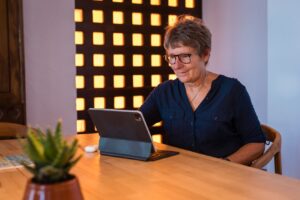
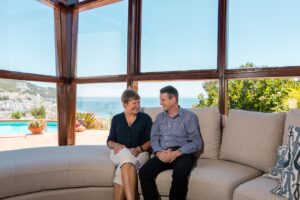
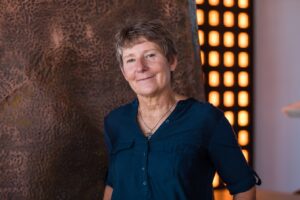
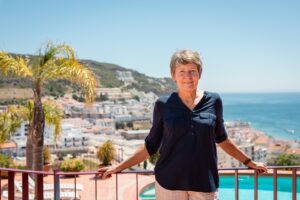
Some photos
Pioneering
Global
Empathic
Researcher and writer
My vision
I want
… to be
…… a micro-influencer
On a wide
… and diverse number
…… of people who may be micro-influencers
I’d like
… for unlikely people
…… to feel seen and heard
In even the tiniest of ways
… by what I do
…… and my journey through the world
My personal story
The story you won’t find in a professional bio
I grew up in Mombasa in the 1960s and early 70s. My father was Chairman of a shipping company. We lived near the sea, no evening TV, just board games round the card table with my parents. Shopping was at Omees (for groceries) and mostly the “Biashara Street” for everything else – a messy hive of small trading units spilling onto the street with chatter and bargaining for colorful cloths, leather sandals, pots and pans, spices and everything else.
Our milk was always slightly sour – it came by train from upcountry and refrigerated transport wasn’t reliable. Cereal for breakfast was a treat, even if you had to leave it on a tray to let the weevils run out before pouring on the milk. When elephants destroyed the water pipes at Tsavo we’d be without water until it was fixed. Power cuts were routine.
We played barefoot in the garden – my mother would remind us to “make a noise” to frighten off the snakes that included black mambas, green mambas, cobras and you name it. Everything seemed normal.
Growing up had lots of youthful angst – would we be allowed to the Whitesands disco at the weekend and who would be there? Would my parents let me hang out with the Horseys during the East African Safari Rally? During the day we cycled to each other’s houses and raced and swam or to the club to play squash. Cool friends had parents with ski-boats. I became crazy about scuba-diving.
Mombasa was vibrant and multicultural – Muslims, different Christian groups, the Arab quarter. We saw people in all kinds of dress on the streets, speaking different languages. Muslim shopkeepers kept piles of change for beggars (a religious obligation). Some women were fully covered (in burqas) and others walked bare-breasted with heavy baskets on their heads. During Ramadan we had to be respectful of Juma (called the houseboy in those days) who might be feeling weak from fasting. Juma cycled up to two hours (including a ferry ride) to get to and from our house every day. Everything seemed normal.
Kenyan independence came when I was small, and it took years to work through the social structures. We never questioned why there were separate bathrooms for “Africans,” “Indians,” and “Whites.” Or three classes on the train. Or why beggars and lepers were Black and people with chauffeurs were White. When I was in my twenties, my father was “Africanized” – given one year to train a Black person to take over as Chairman before he started his own maritime company. None of it seemed odd or dramatic. Everything seemed normal.
At nine, I was sent to boarding school in Limuru, upcountry. There were 12 students when I started. The school was on a farm – cows wandered the fields. Our clothes stayed in trunks under our beds. We all shared the same bathwater. At night we could take our supper stool back to the dorm as a bedside table. Teachers rarely showed up, so we spent most of our time playing. We built an entire village in the bush around the school – carved out “houses,” each person had an enterprise, and currency was custard apple seeds. My business was making cakes from red mud and decorated them with flowers. Others carved custard apple shells into cups and teapots.
When they built new dormitories, the bathroom wasn’t finished when we moved in. We had to wake the ayah if we needed the toilet at night and walk across the field with her – no lighting. Sometimes you could hear a lion coughing on the other side of the fence. Everything seemed normal.
The 14-hour train journey to and from school at the start and end of term, the 3-4 hour drive in the school combi after that – it was just what you did. At 15, my parents worried I wouldn’t get any O-levels at this school (they were right) and sent me and my sisters to boarding school in Derbyshire, UK. We flew to England by ourselves, took the train to Derby where we were met. No mobile phones back then.
School in England was a culture shock I didn’t know was coming. After that, nothing seemed normal.
In the 1970s and with a Masters in Development Studies under my belt I had a post as “Community Development Worker” at the Leicester World Development Centre – the only salaried person, sponsored by Oxfam and Christian Aid to promote “aid, trade, and human rights” in inner-city Leicester. I had no supervision beyond a volunteer advisory council that met every few months, so I carved out my own work.
I stayed connected with everyone: trade unions, the Muslim community, Christian groups, feminist groups, the gay movement, Troops Out of Ireland, Marxists, city council politicians, Asian homeworkers, the Black Arts Centre. I looked for opportunities to convene conversations across local and international groups to highlight solidarity around aid, trade, and human rights.
I stayed connected with liberation movements in Southern Africa – SWAPO (Namibia), ANC (South Africa), Frelimo (Mozambique), and in Latin America – the Sandinistas in Nicaragua. I invited speakers from these movements to Leicester, created displays, built lasting relationships.
I called in to local radio when there was unclear or inaccurate information about countries in Southern Africa. I raised money from the British Arts Council to put on bands from Africa and Latin America – organized concerts where I’d create poster displays about the history and politics of their countries. Each international band had a local support act of similar genre. I worked with a world music DJ to put on weekly discos at the Black Arts Centre.
It was about creating spaces where people could see their connection to global struggles for justice.
When funding for the Centre ended, I let myself get talked into buying a small restaurant with a “friend” – a Palestinian musician living in Leicester. The idea was world food, world music, world beers and wine. It was original at the time.
He was lying about the money he had to invest. I put in my house and money from my mother, all while believing he was just about to pay me back. After some very painful years, I lost everything, including my house. My daughter, who was eight, went to stay with her dad (who I was divorced from) until I could get my life together. I went bankrupt during a period of high bankruptcies in the UK.
I applied for various jobs. After just failing to get a position I was convinced was mine (they asked the last two candidates if we’d job-share; neither of us wanted to, they gave it to her), I felt miserable and poisonous toward my former business partner. I hated that I hadn’t been able to pay some creditors – like the world beer suppliers. I had great difficulty forgiving him and getting my life together.
I saw an advert for a certificate in teaching English as a foreign language happening in Lisbon. I’d already considered retraining in TEFL, and it was cheaper in Lisbon than London. I also thought it might bring me closer to Mozambique, where I thought I might live. So I sold my bicycle, rented my house (about to be repossessed) to students who’d take the risk for cheap rent paid upfront, and went to Lisbon.
After the course, it was easy to find work teaching English to businesses for the British Council. I just stayed.
Portugal wasn’t supposed to be permanent, but it became home – whatever that means to someone who feels foreign everywhere.
I taught English at the British Council, became coordinator of Special Language Services, teaching high-powered business people. Then I moved to teaching at private universities, developing an interest in preparing students for the genres they’d encounter internationally, not just teaching the language.
Jess, my daughter who had traveled with me to rural communities in Kenya and Sudan developed her own travel plans. She lived in Brazil for a few years, speaks fluent Portuguese, does capoeira, and dances forró like a natural – people mistake her for Brazilian. She’s become her own kind of boundary-crosser and carrier of all the angst that entails. She is now 43 with four children, living in The New Forest, UK.
Among a number of relationships, I met Bruno twelve (or was it sixteen?) years younger than me. We moved to his family’s house in a village near Alenquer. His parents lived in Lisbon but came at weekends. His grandparents lived in the traditional house on the property while we lived in the larger new house. Weekends involved a lot of cooking, eating, and drinking together. At breakfast we talked about lunch, at lunch we planned “lanche” and dinner. Bruno’s grandfather, who couldn’t read or write, always called me “Espanhola” – for him, anyone who wasn’t Portuguese was Spanish. He and Bruno’s grandmother worried I didn’t feed Bruno enough, despite his enthusiasm for shopping and cooking.
Bruno and I eventually split, but I continued living at the family house. They were gracious and kind and never made me feel unwelcome. Bruno’s father helped me find a house in Setúbal where there was a job I wanted. He was well-connected and helped me get a mortgage through a bank manager he knew. Bruno now works for the Polícia Judiciária.
Around this time, my best friend Sally was dying of cancer. Her son, Nuri, was twelve. I adopted him while she was still alive. Nuri was born in Portugal, went to Portuguese school, and is completely bilingual. He became part of my Portuguese life – another way I was entangled with this country.
The place I felt most at home was in Setúbal. I taught at the business school (Escola Superior de Ciências Empresariais), where I was creative and innovative – threatening qualities in a highly politicized institutional environment. I did a Certificate in Online Education and Training with the University of London and stayed on as a tutor. I worked on projects with the International Labour Organization, the European Social Fund, and organizations across Africa and South America. The more successful my projects the more enemies I made, and my application to turn my (social learning) research to a PhD was turned down three times because it was “irrelevante”. Eventually I left and started my own business, Eudamonia Unipessoal Lda.
My consulting work grew. I did facilitation, designed workshops, gave presentations and strategic advice in English and Portuguese. I participated in an online workshop on “The foundations of communities of practice” and then worked with one of the organizers to run “The Setúbal dialogue” – bringing together 20 people from around the world who worked with communities of practice. It was deeply meaningful and the group stayed together. We met at conferences, organized our own sessions. I hosted several events in Portugal for this group.
Etienne Wenger, who had started the Foundations workshop, was at these events. And after some years of meeting at conferences and doing work together, when both of us were in a marriage hiatus, we started a personal relationship. Eventually we married and became Etienne Wenger-Trayner and Beverly Wenger-Trayner.
I moved to California with Nuri. Etienne and I tried to do as much work as a pair as possible, writing together. Our work synchronized and complemented each other, though it was sometimes frustrating – many people who hadn’t known my previous work assumed I was second fiddle to Etienne. He has a kind of “halo effect” where people attribute him with all qualities, even those he doesn’t have because he’s gifted with words. We’ve been working to move beyond him being labeled “Mr. Communities of Practice” and together developing the broader field of social learning.
Nuri stayed in California when we returned to Portugal in 2015. Recently he moved to Tennessee with his partner (who he met in California but whose family is from there) where life is more affordable than California. He has three children.
We live in Sesimbra at the Social Learning Lab – a stunning house of architectural interest where we write books, consult across sectors and disciplines, and host workshops. We have few clients in Portugal; almost all are international.
I dabble seriously in various sports, currently doing yoga and taking many walks. I resist all categories people want to put me in – when something is labeled in a binary way, I feel a deep, forceful rejection that is hard to put into words. Labels create an “other”, a neat box to put something complex and universal in a place where it doesn’t belong.
Publication archive
Here are publications I (co-) authored before writing with Etienne. Recent publications can be found under “Resources“.
Key words: new literacies, genre analysis, narrative, international, course design, inclusion, connection, communities, practice, autoethnography
Theory of genre-aligned practice
Mavor, S., & Trayner, B. (2002). Aligning Genre with Practice: an Interdisciplinary Perspective for Course Design and Teaching in Higher Education. International Journal of Languages for Specific Purposes, Vol 20, nº 4, April, Pergamon Press, Elsevier Science.
International inclusion
Trayner, B. (2004). Babel in the international café. In Huysman, M., Wenger, E., Wulf, V. (eds) Communities and Technologies. Dordrecht: Kluwer Academic Publishers.
Mavor, S. & Trayner, B. (2003) “Exclusion in international online learning communities”. In Reisman, S. (eds) Electronic Learning Communities: Current Issues and Best Practices, Conneticut: Information Age Publishing.
Trayner B., (1986) Women in Kenya: the case for cooperatives. Unpublished thesis submitted to the University of Bath in completion of a Masters in Development Studies.
Course design, online learning, and communities of practice
Gresham, L., Pray, L., Wibulpolprasert, S. and Trayner, B. (2011) Public–private partnerships in trust-based public health social networking: Connecting organizations for regional disease surveillance (CORDS). J Commer Biotechnol 17, 241–247 (2011).
Arnold, P., Smith, J. & Trayner, B. (2011). One more tool – or exploring the practice of introducing new technologies in dispersed communities. In Lone Dirckinck-Holmfeld, Vivien Hodgson, David McConnell (Eds), Exploring the Theory, Pedagogy and Practice of Networked Learning, New York: Springer Publishers.
Arnold, P., Smith, J. & Trayner, B. (2009). Where do we meet next time? Negotiating places, identities and technologies in an auto-ethnography of a community of practice. Observatorio (OBS*), OberCom, Lisbon.
Arnold, P., Smith, J. & Trayner, B. (2007). Narrative, community memory and technologies – or writing a literature review in high modernity. In Community Informatics, Identity and Empowerment, Cambridge Scholars Publishing.
Trayner, B., Smith, J.D., Bettoni, M. (2007). Participation in International Virtual Learning Communities. In Filipe, J., Cordeiro, J., Pedrosa, V. (eds) Web Information Systems and Technologies. Lecture Notes in Business Information Processing, vol 1. Springer, Berlin, Heidelberg.
Smith, J. & Trayner, B. (2006) Online Course Design from a Communities-of-Practice Perspective, ACM’s eLearn Magazine, Education and Technology in Perspective.
Arnold, P., Smith, J., Trayner, B. (2006). Narrative: designing for context in virtual settings. In Figueiredo, A.D. & Afonso, A.P (eds) Managing Learning in Virtual Settings: the Role of Context. Hershey, PA: Idea Group, Inc,
My blogs
I was an avid blogger in the early day of blogging. At that time blogging was journaling. Here is a link to my first blog.
Em Duas Línguas (started in 2004)
Nowadays I’m so busy writing books, but I still try to do it from time to time. Here’s a link:
Off-script (current)